


What ID do you need to register to bid at auction?
Before you can bid at a UK property auction — in the room, online, or by telephone — you must first register and provide acceptable ID. This is not a formality. It is a legal requirement that every auction house is obliged to apply under anti-money laundering legislation, and failure to provide the correct documents will prevent you from bidding, even on auction day itself.
This article explains exactly what ID you need to register to bid at auction, why it is required, how the rules change depending on whether you are bidding as an individual or a company, and what the process looks like for online auctions. If you are preparing to bid on a property, getting your documents in order well in advance is one of the most practical steps you can take.
Why auction houses ask for ID
All UK property auction houses are required to carry out identity verification under the Money Laundering, Terrorist Financing and Transfer of Funds (Information on the Payer) Regulations 2017. These rules are overseen by HMRC and apply to any business involved in high-value property transactions.
The requirement exists to ensure that property is not used as a vehicle for laundering proceeds of crime. Auction transactions are particularly scrutinised because they are fast, often cash-funded, and can involve significant sums. As a buyer, you should expect every reputable auction house to apply these checks without exception.
The checks happen at two stages: once when you register to bid, and again — more thoroughly — if you are the successful bidder. At the bidding registration stage, the auction house is confirming you are who you say you are. After the hammer falls, solicitors also carry out their own anti-money laundering property auction checks before the transaction can proceed. The two sets of checks are separate and both are mandatory.
| Category 1 — Photographic ID | Category 2 — Proof of Address |
|---|---|
| Current signed passport | Utility bill dated within the last 3 months (not a phone bill) |
| Current photo card driving licence | Bank or building society statement dated within 3 months |
| EU member state identity card | Mortgage statement from a recognised lender (within 3 months) |
| Armed Forces ID card | Local council or housing association rent card |
| Firearms or shotgun certificate | Paper driving licence (UK or EU) — for address only |
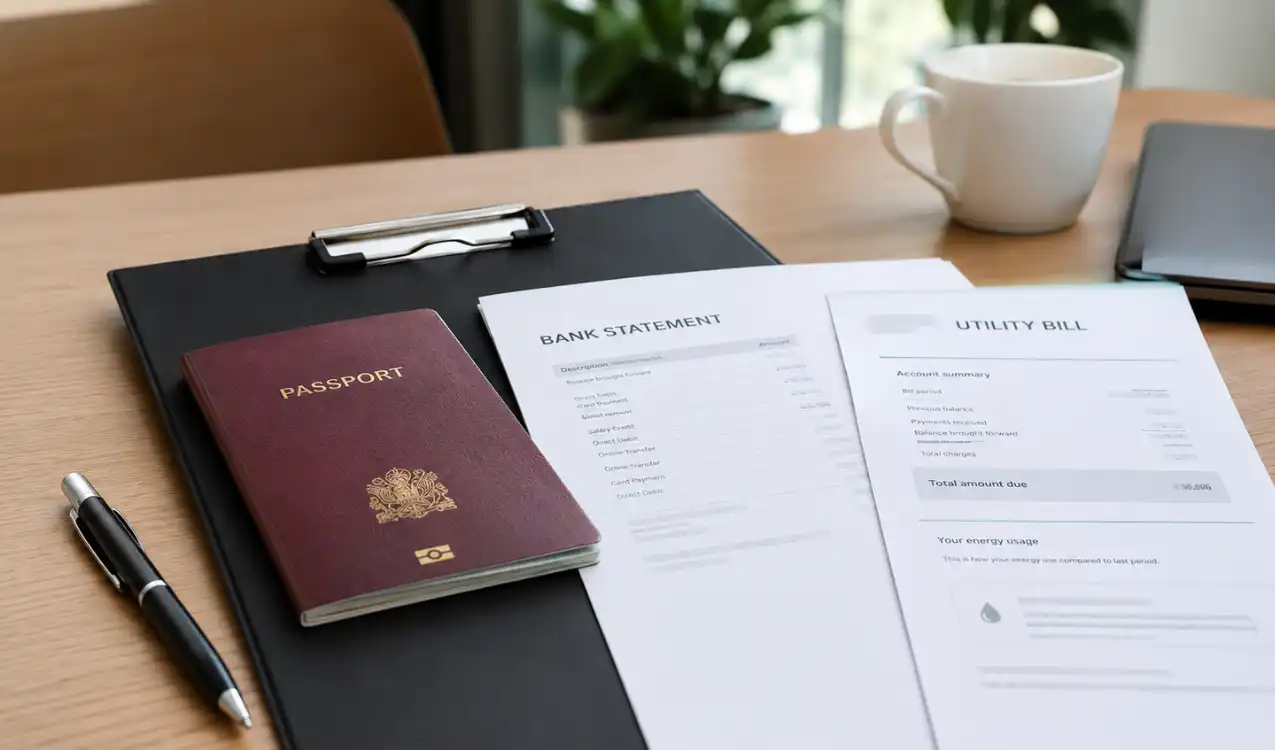
A few important points about this list: phone bills are not accepted as proof of address at most auction houses. All address documents must show the current date — most houses require the document to be dated within the last three months, and the date must be clearly visible. Blurred, heavily cropped, or incomplete documents are commonly rejected and will delay your registration.
This is part of the broader package of property auction registration documents you will need to prepare before the auction date.
Bidding as a limited company or LLP
If you intend to register a bid in the name of a company rather than as an individual, the documentation requirements are more extensive. Auction houses need to verify the company’s legal existence and identify who is behind it.
Most auction houses will require:
- The company’s registered name, registration number, registered office address, and principal place of business
- Evidence of incorporation — typically a certificate of incorporation from Companies House
- Details of all directors and significant shareholders (usually defined as those holding 25% or more)
- Photographic ID and proof of address for each individual director and beneficial owner, as per the individual requirements above
Buying through a company or SPV is a common strategy for property investors, but it requires careful preparation. The due diligence process is more extensive, and the timeline for getting registration approved is typically longer. Our article on buying auction property through a company or SPV explains the additional considerations in full.
Buying at auction and need legal support?
ID checks are just the first step. Once you have registered and are ready to bid, having a solicitor review the legal pack before auction day can protect you from costly surprises after the hammer falls. Upload your legal pack for a fast expert review — we can usually turn this around within 24 to 72 hours.
What ID do you need for online bidding?
The ID requirements for online property auctions are the same as for in-room bidding — the same two categories of document apply. What changes is the process for submitting and verifying them.
Most online auction platforms now use a digital identity verification service. Rather than handing over physical documents on the day, you will typically be asked to complete an online ID check before the auction using an app or web-based portal. Some platforms use services such as Credas or similar providers, which require you to photograph your ID document and take a short video to confirm your identity.
The registration deadline for online auctions is particularly important. Most platforms require ID verification to be completed well before the auction begins — often 24 to 48 hours in advance. Attempting to verify your identity on the morning of the auction is a common mistake that results in buyers being unable to bid on the day.
Once verified, you will receive login credentials for the live auction platform. On auction day, you must be connected to a stable internet connection before the sale begins and must be logged in before your lot comes up. Auction day preparation requires the same level of organisation as attending in person.
Source of funds: the check that comes after ID
Identity verification confirms who you are. But auction houses and solicitors are also required to understand where your purchase funds are coming from. This is known as source of funds verification, and it is a separate obligation under the same anti-money laundering property auction framework.
If you are purchasing with cash, you will typically need to demonstrate that the funds have a legitimate and traceable origin — for example, savings built up over time, the proceeds of a property sale, inheritance, or a business distribution. Bank statements showing the accumulation of funds are commonly requested.
If you are using a mortgage or bridging finance, your lender will carry out their own checks, but the auction house and your solicitor will still need confirmation that the deposit and any additional costs are coming from a legitimate and identifiable source.
This step catches many first-time auction buyers off-guard, particularly those who have funds held in multiple accounts or have recently received a lump sum. Our detailed guide to source of funds in property transactions explains what evidence is typically needed and how to prepare it.

Common reasons ID is rejected at auction registration
A significant number of auction registrations are declined or delayed not because buyers lack valid documents, but because the documents they submit fail basic quality checks. The most frequent issues include:
- Blurred or poorly lit photographs of documents — the full document must be legible
- Documents that are out of date — expired passports or licences will not be accepted
- Address documents dated more than three months before the auction
- Phone bills submitted as proof of address — these are not accepted by most auction houses
- Trying to use the same document for both categories — for example, submitting a photo card driving licence as both photographic ID and proof of address
- Incomplete uploads — only part of the document visible, or the issue date/address cut off
If your registration is declined, most auction houses will give you the opportunity to resubmit. However, this takes time, and if you discover the problem on auction day, it will be too late. Submitting your documents at least five to seven days before the auction date gives the registration team time to process your application and flag any issues before they become a problem. Full guidance on what to expect when buying property at auction covers this preparation in more detail.
What happens with your ID after the auction?
Auction houses and solicitors are required to retain copies of identity documents in accordance with HMRC record-keeping requirements under the Money Laundering Regulations. The standard retention period is five years from the end of the business relationship.
Your solicitor is separately required to carry out their own client identification checks before they can act for you, even if the auction house has already verified your identity. These are two distinct legal obligations. The solicitor’s check is governed by the Solicitors Regulation Authority (SRA) and the Law Society’s anti-money laundering guidance. If you need to instruct a solicitor quickly after winning a lot, having your ID documents ready to send immediately will help avoid any delay in getting the conveyancing process started — a material concern given that completion deadlines after auction are typically just 20 to 28 days.
For further background on the regulatory framework, the HMRC guidance on anti-money laundering supervision for estate agency businesses provides useful context, although the requirements for solicitors are governed separately by the SRA.
Get your auction preparation right from the start
Having the right ID in order is just the beginning. Before you bid on any property at auction, it is worth reviewing the legal pack to understand what you are committing to — and what risks come with it. At AuctionSolicitor, we carry out fast, fixed-fee legal pack reviews for buyers across England and Wales, typically within 24 to 72 hours.
We can also act for you after the hammer falls, managing the full conveyancing process to meet your completion deadline without delay.
