

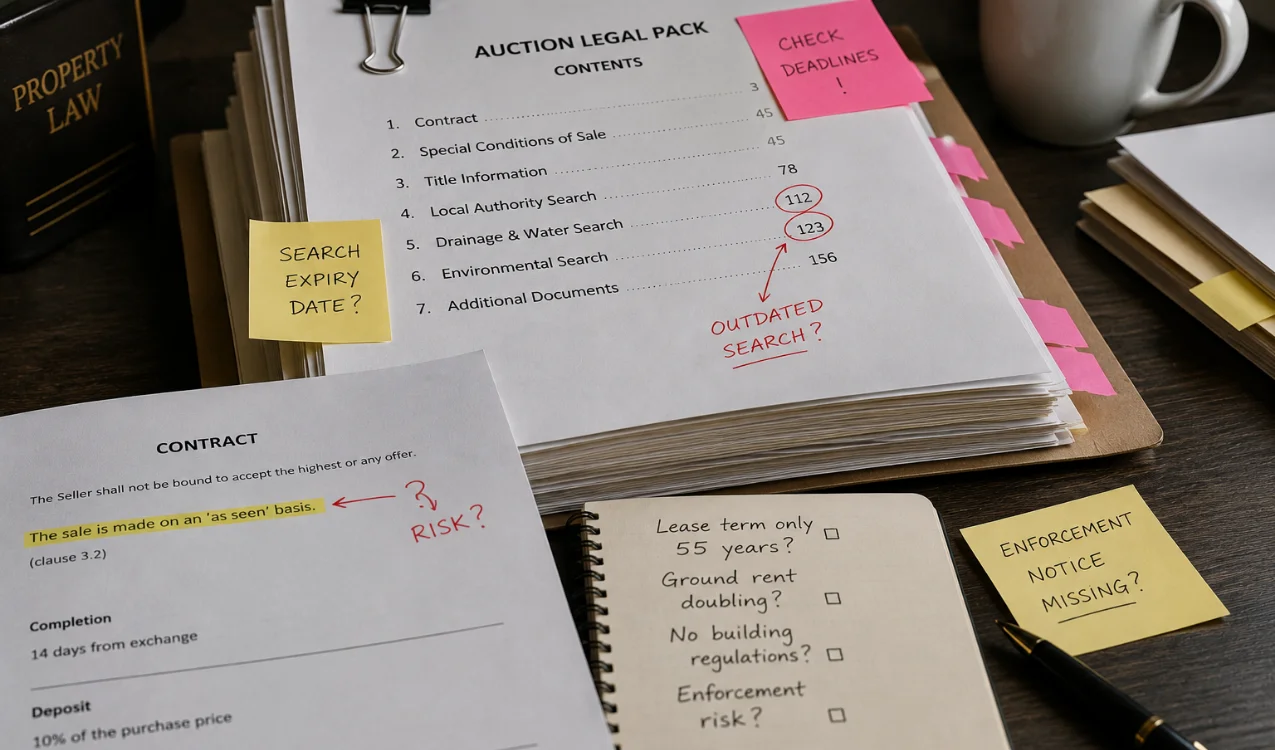
Auction legal pack mistakes: 10 things buyers read past that a solicitor won't
Auction legal pack mistakes are rarely obvious. Hand the same auction legal pack to a buyer and to a solicitor, and they can come away with very different concerns. The pages are the same, but the buyer is naturally looking for reasons to bid while the solicitor is trained to identify wording, omissions and cross-references that can change cost, risk or timing. Most of the ten examples below are not hidden; they are ordinary-looking clauses or gaps that are easy to read past under auction pressure.
This isn’t another list of property-issue categories. For that, our guide to auction red flags and risks already covers short leases, tenancies, covenants and other issue types in depth. This article focuses instead on the wording, absences and document-structure traps that a buyer can read past but a solicitor is trained to test.
Why auction legal pack mistakes are easy to miss
An auction legal pack is prepared for the sale by the seller’s solicitor. It sets out the seller’s title and the contractual terms offered to bidders; it is not legal advice to the buyer. In a typical unconditional property auction, the successful bid creates a binding contract when the hammer falls, subject to the applicable auction conditions and special conditions. That is why a buyer’s solicitor reads the pack looking for wording that shifts cost, risk or timing before the bid is made. If you need a document-by-document refresher first, see our guide to what’s in an auction legal pack.
General guidance only: the legal effect of any clause depends on the exact wording of the contract, the special conditions and the documents for that particular lot.
10 auction legal pack mistakes buyers read past
1. The “deemed to have full knowledge” clause
What it looks like to a buyer: A short sentence in the special conditions, worded something like “the buyer is deemed to bid with full knowledge of all such matters.” It reads like standard legal boilerplate, similar to the small print at the bottom of any contract.
What a solicitor reads it as: A deemed-knowledge clause can allocate risk to the buyer and make it harder to argue later that a matter covered by the contract or available documents was unknown. Its effect is not unlimited and depends on the exact wording and circumstances, so a solicitor checks precisely what the clause says you are deemed to know before advising you to bid.
2. No mention of vacant possession
What it looks like to a buyer: The photos show an empty property, the listing says nothing about tenants, and there is simply no sentence in the pack addressing occupation either way.
What a solicitor reads it as: Silence is not a guarantee of vacant possession. A solicitor checks the contract, special conditions, tenancy or licence documents, title entries and any replies or management information rather than assuming the property will be empty simply because the listing or photographs suggest it is.
3. “No searches have been obtained”, tucked into the special conditions
What it looks like to a buyer: One line among many special conditions, easy to read at the same pace as the clause about buyer registration or the clause about payment methods.
What a solicitor reads it as: A statement that searches have not been obtained means the usual search information may not be available before you bid. The special conditions may also place the risk of proceeding without those searches on the buyer. A solicitor checks exactly what is missing, what can still be investigated before the auction and what the absence could mean for funding or use of the property.
4. A document referenced but not actually in the pack
What it looks like to a buyer: A line such as “planning permission ref [number] applies” or “see lease dated [date]” with no copy of that document included, easy to read as a cross-reference rather than a gap.
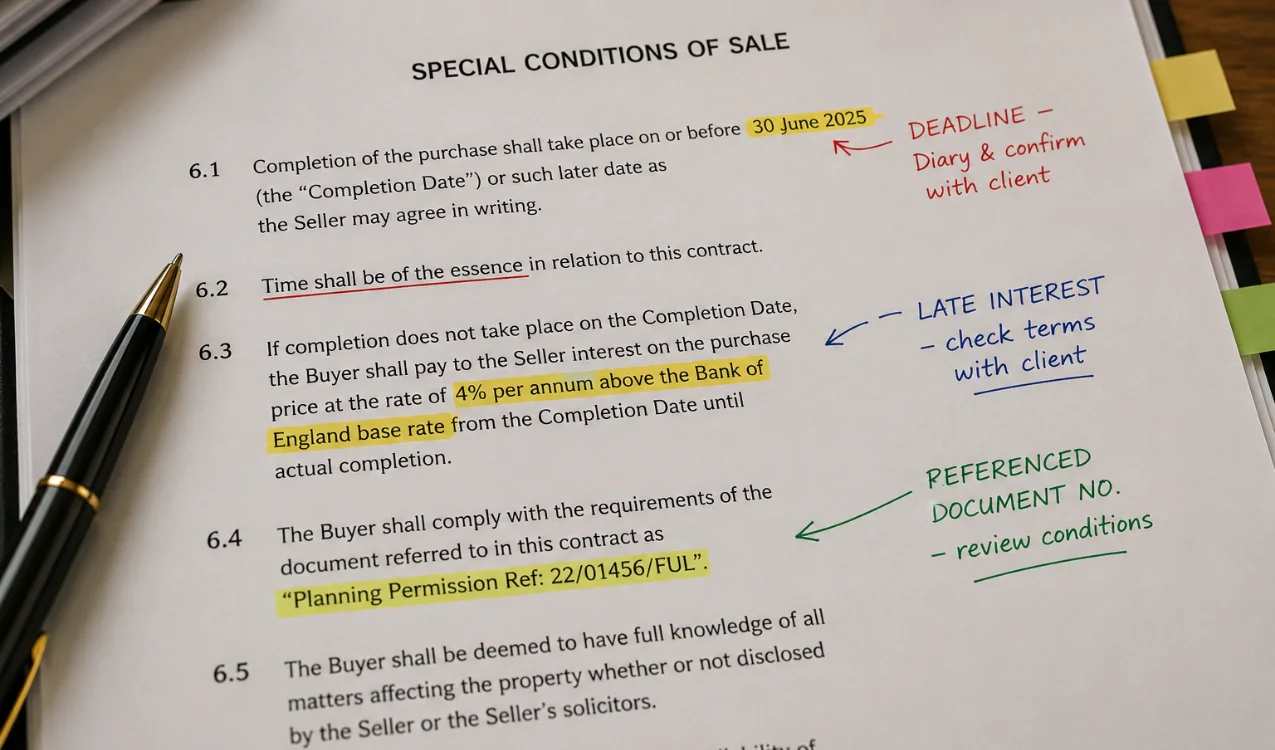
What a solicitor reads it as: A referenced-but-missing document is an unresolved gap, not something to assume is harmless. A solicitor will usually want to obtain or assess the underlying document before giving a clear view, because a lease, transfer, planning decision or consent can contain restrictions, conditions or liabilities that are not apparent from the cross-reference alone.
5. Numbers that don’t quite match between documents
What it looks like to a buyer: The floor plan, the property description and the title plan all describe roughly the same property, and any small differences look like the kind of rounding you’d expect between documents prepared at different times.
What a solicitor reads it as: A solicitor cross-references the title register and title plan against the contract and other pack documents to identify inconsistencies in extent, access or boundaries. A small mismatch may be harmless, but it may also indicate that the marketing material and the registered title are not describing exactly the same land.
Want a second, trained pair of eyes on your pack?
Whether you've already spotted something that concerns you or simply want the pack checked before you commit, a focused review gives you a plain-English picture of the legal terms, missing information, deadlines and potential costs that matter to your decision.
Speak to our auction team6. A completion deadline buried in the special conditions
What it looks like to a buyer: A specific number of working days for completion, stated once, in a clause among several others, without any comparison to what’s “normal.”
What a solicitor reads it as: Do not assume the completion period from another auction. Common auction conditions may provide a standard timetable, but special conditions can change it and some lots require completion much sooner. A solicitor checks the exact number of business or working days because the deadline affects funding, searches, lender requirements and the consequences of delay.
7. An interest rate on late completion with no worked example
What it looks like to a buyer: A clause stating interest applies “at X% above base rate” on any sum outstanding after the completion date — a single percentage that doesn’t look alarming on its own.
What a solicitor reads it as: A solicitor converts the contractual rate into an estimated daily cost and checks what sum the rate applies to, when interest starts and whether any other default remedies apply. Even a short delay can become expensive on a high-value purchase, so the wording matters more than the headline percentage alone.
8. A covenant or restriction referenced by document number only
What it looks like to a buyer: A note in the title register referring to “the restrictions in the transfer dated [date]” without the transfer itself being included in the pack.
What a solicitor reads it as: You cannot judge the effect of a covenant or restriction from a document reference alone. A solicitor treats the point as unresolved until the underlying transfer, deed or other document can be reviewed, then explains whether it affects use, access, alterations, development, sale or mortgageability.

9. Management pack details that sit apart from the lease itself
What it looks like to a buyer: For leasehold lots, the lease sets out the headline terms — length, ground rent, service charge structure — and looks complete on its own.
What a solicitor reads it as: For leasehold lots, consent requirements, service-charge information, planned major works, arrears and disputes may appear in management information or replies rather than in the lease itself. A solicitor reads those documents together because the lease alone may not show the current financial or management position.
10. A late addendum issued the morning of the auction
What it looks like to a buyer: You downloaded and read the pack a week or two before the sale, and feel confident you know what you’re bidding on.
What a solicitor reads it as: The pack can be updated before the lot is offered, and an addendum or auctioneer announcement can change a special condition, add a document or correct information. A solicitor checks the latest version available and any last-minute updates before final advice, because an earlier download may no longer be the complete set of terms applying to the bid.
What these auction legal pack mistakes mean for buyers
The point is not that every clause, omission or cross-reference is automatically a red flag. These patterns can arise in ordinary auction packs, and their significance depends on the specific lot. What matters is that they work through absence, cross-reference or ordinary-sounding wording rather than an obvious warning. For a full breakdown of the review process, see our guide to what a solicitor checks in an auction legal pack review, and for the clauses that alter standard auction terms, read our auction special conditions explained guide.
The RICS consumer guide to property auctions advises buyers to obtain the legal pack and seek legal advice before bidding. It also explains that, in a conventional unconditional auction, the successful bidder is legally obliged to complete once the hammer falls. That is why the final contract, conditions and any addenda need to be checked before the bid, not afterwards.
What if you've already spotted something that looks like this?
If any of the ten patterns above sound familiar from a pack you're currently considering, a focused pre-bid review can clarify what the wording actually means for that lot. AuctionSolicitor states that legal pack reviews are usually completed within 24 to 72 hours, depending on complexity, urgency and the completeness of the pack. The review should separate minor points from issues that affect price, funding, completion or whether you decide to bid at all.
