

What is a flying freehold and why is it problematic?
A flying freehold is one of the most misunderstood title issues you can encounter when buying property at auction. It sounds unusual — and in many ways, it is. Yet flying freeholds are far more common than most buyers realise, particularly in older terraced houses, converted buildings, and historic town-centre properties.
If you are considering bidding at auction and the legal pack flags a flying freehold, it is essential to understand exactly what it means, why it can cause serious complications, and whether it should affect your decision to proceed. Buying at auction is binding from the moment the hammer falls, so there is no time to investigate these issues afterwards.
What exactly is a flying freehold?
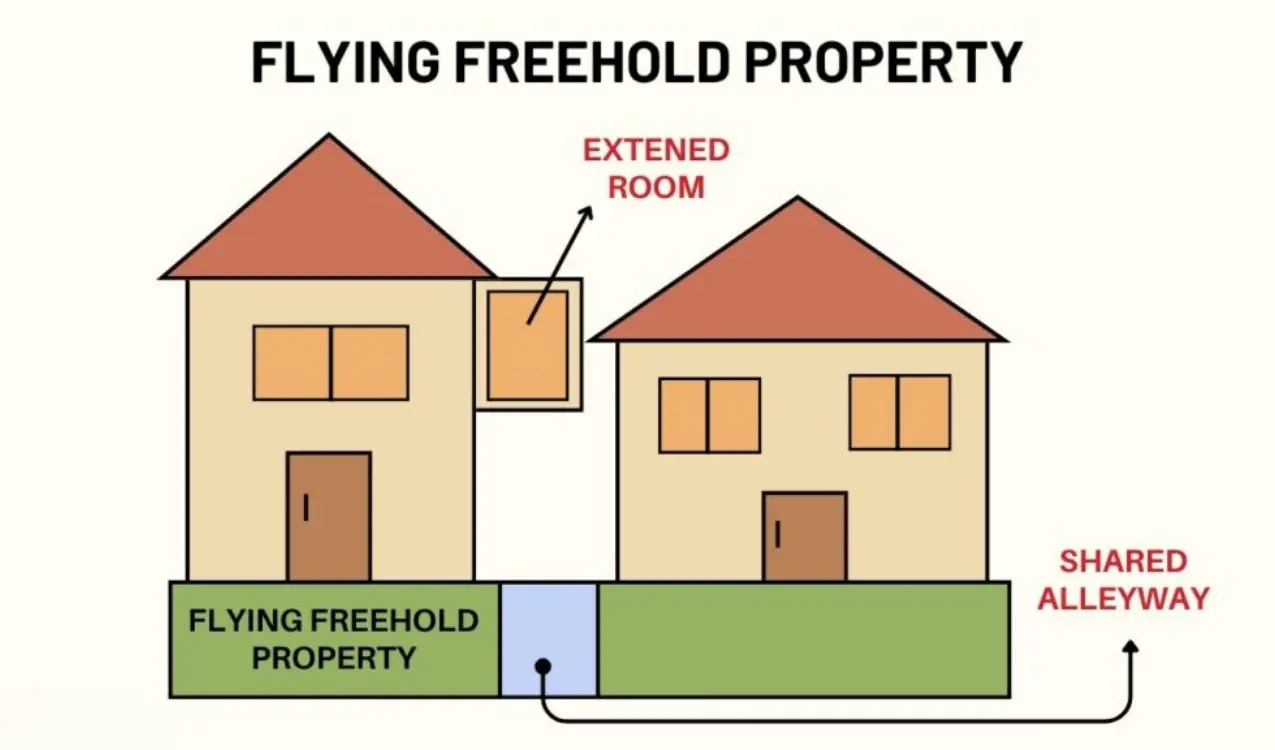
A flying freehold exists when part of a freehold property extends over or under another person’s freehold land, without being fully supported or enclosed by its own structure. In other words, a section of your property literally “flies” over someone else’s title.
Common examples include:
- A room or extension built above a shared passageway or alleyway
- A first-floor flat that sits partly over a neighbouring garage
- A cellar or vault that runs beneath a neighbour’s garden or building
- An archway or covered walkway where the upper storey belongs to a different owner
Flying freeholds are entirely legal and are recognised under English and Welsh property law. They tend to arise in older or converted properties where buildings were constructed before modern planning standards existed. However, being legal does not make them straightforward — and when buying property at auction, the compressed timescales mean these issues must be identified and assessed well before auction day.
Why are flying freeholds problematic?
The core issue with a flying freehold is that it creates a legal relationship of dependency between neighbouring property owners. Because one property relies on another for physical support, shelter, or access, problems arise when that relationship breaks down.
Rights of access and repair
Without an express legal right to enter the neighbouring land, you may be unable to carry out essential repairs or maintenance to your own property. If the shared or adjoining structure deteriorates, you could find yourself stuck — legally and physically — unable to fix what is yours.
Neighbour disputes
Flying freehold problems often escalate into neighbour disputes. If your neighbour refuses access, fails to maintain their portion of the structure, or carries out alterations that affect your part of the building, the consequences can be significant. Without clearly documented rights, resolving these situations can require costly legal action.
Structural alterations
If the structure beneath your flying section is altered or damaged — deliberately or through neglect — the integrity of your property may be directly affected. This is not a theoretical risk. It has caused real disputes in older properties across England and Wales.
Understanding these risks before you bid is precisely why a thorough auction legal pack review is so important. The legal pack should reveal whether appropriate rights are in place — and if it does not, that is itself a significant red flag.

Will a flying freehold affect your mortgage application?
This is one of the most significant flying freehold problems for auction buyers who plan to use mortgage finance. Many lenders are cautious about flying freeholds, and some will refuse to lend on them altogether.
Where a lender is willing to proceed, they will typically require one or more of the following protections to be in place:
- A flying freehold indemnity insurance policy
- Confirmation that adequate rights of support, shelter, and access are granted in the title deeds
- Evidence that the flying portion accounts for less than 25% of the total floor area of the property
- A Deed of Mutual Covenant between the respective owners, setting out each party’s obligations
If none of these protections exist, a mortgage application on a flying freehold property may be delayed, down-valued, or declined outright. For auction buyers, this is a critical consideration — you are legally committed from the moment the hammer falls, and you cannot simply withdraw if your finance falls through.
This is why reviewing the legal pack in advance matters so much. If you are buying property at auction with a mortgage, a solicitor should flag any flying freehold issues before you bid, not after.
Is a flying freehold flagged in your auction legal pack?
Flying freeholds affect mortgage lending, neighbour relationships, and future resale. A specialist review tells you whether the necessary rights are in place — and whether the risk is manageable — before you bid. Get your pack reviewed
Can a flying freehold be resolved?
The good news is that a flying freehold does not automatically make a property unsellable or unbuyable. In many cases, it can be managed or resolved with the right legal support. However, it is important to understand what “resolved” actually means in practice — flying freeholds often date back decades or even centuries, and the absence of documentation is common.
A specialist auction solicitor can help by:
- Checking whether rights of support, access, and repair are already granted within the title deeds
- Advising on the suitability of indemnity insurance as a protective measure
- Attempting to negotiate or formally register new legal rights, where it is practical to do so
- Identifying whether a Deed of Mutual Covenant is achievable and appropriate
Indemnity insurance is often the most pragmatic solution. It does not remove the flying freehold, but it provides financial protection against loss arising from defects in the title. Many lenders will accept this, provided the cover meets their requirements. Your solicitor should always confirm this with your lender before you proceed.
For a broader understanding of how title issues are treated under English property law, the HM Land Registry provides guidance on title registration and how unusual title arrangements are recorded.
Flying freeholds and buying property at auction
Auction properties frequently come with title complications that would not be found in a standard residential sale — and flying freeholds are among the most common. Sellers are not always obliged to disclose these issues proactively, which is why a detailed review of the auction legal pack is not optional — it is essential.
When buying property at auction, the contract becomes binding the moment your bid is accepted. There is no cooling-off period, no subject-to-survey clause, and no opportunity to renegotiate once the hammer has fallen. If you discover a flying freehold issue after the auction, your only options are to complete the purchase, face financial penalties, or in rare circumstances attempt to negotiate with the seller.
This is why pre-auction legal due diligence is so critical. A solicitor who specialises in auction conveyancing will know exactly what to look for. They will assess whether the flying freehold is documented, whether the necessary rights are in place, and whether the situation is one that lenders or future buyers will accept. You can learn more about what is included in a legal pack review on our what we check in an auction pack page.
What to look for in the legal pack if a flying freehold is flagged
If the legal pack mentions a flying freehold, here are the key questions a solicitor should answer for you before you bid:
- Are rights of support, shelter, and access expressly granted in the title deeds or registered at Land Registry?
- Does the title include any obligations on the neighbouring owner to maintain the relevant structure?
- Has indemnity insurance already been obtained, and if so, does it cover future owners?
- Does the flying portion exceed 25% of the total floor area — which is the threshold most mortgage lenders apply?
- Are there any existing disputes or correspondence with the neighbouring owner that would indicate an unresolved conflict?
These are not questions you can answer by simply reading the legal pack yourself. The documents can be complex, and the absence of information is often as significant as what is included. A specialist solicitor will identify gaps, raise appropriate enquiries, and give you a clear recommendation on whether to proceed. To understand how the broader process works for buyers, our guide on buying property at auction walks you through every stage, from reviewing the legal pack to meeting your completion deadline.
Summary: is a flying freehold a dealbreaker?
A flying freehold is not automatically a dealbreaker — but it is never something to overlook, particularly when buying property at auction. The compressed timescales and binding nature of auction contracts mean that flying freehold problems must be identified and assessed before you bid, not after.
With the right legal advice, many flying freehold situations can be managed — whether through indemnity insurance, the confirmation of existing rights, or in some cases the formalisation of new legal agreements. The key is knowing what you are dealing with before you commit.
At AuctionSolicitor, we specialise in exactly this type of pre-auction due diligence. We review the legal pack, identify title issues including flying freeholds, and give you a clear, practical assessment of the risks — so you can bid with genuine confidence.
We identify flying freehold problems — and advise on how to manage them.
A flying freehold requires expert title examination, not just a note in the pack summary. Our specialist solicitors confirm whether rights of support, access, and repair are properly documented, advise on indemnity insurance options, and give you a clear assessment of the risks before you commit.
