

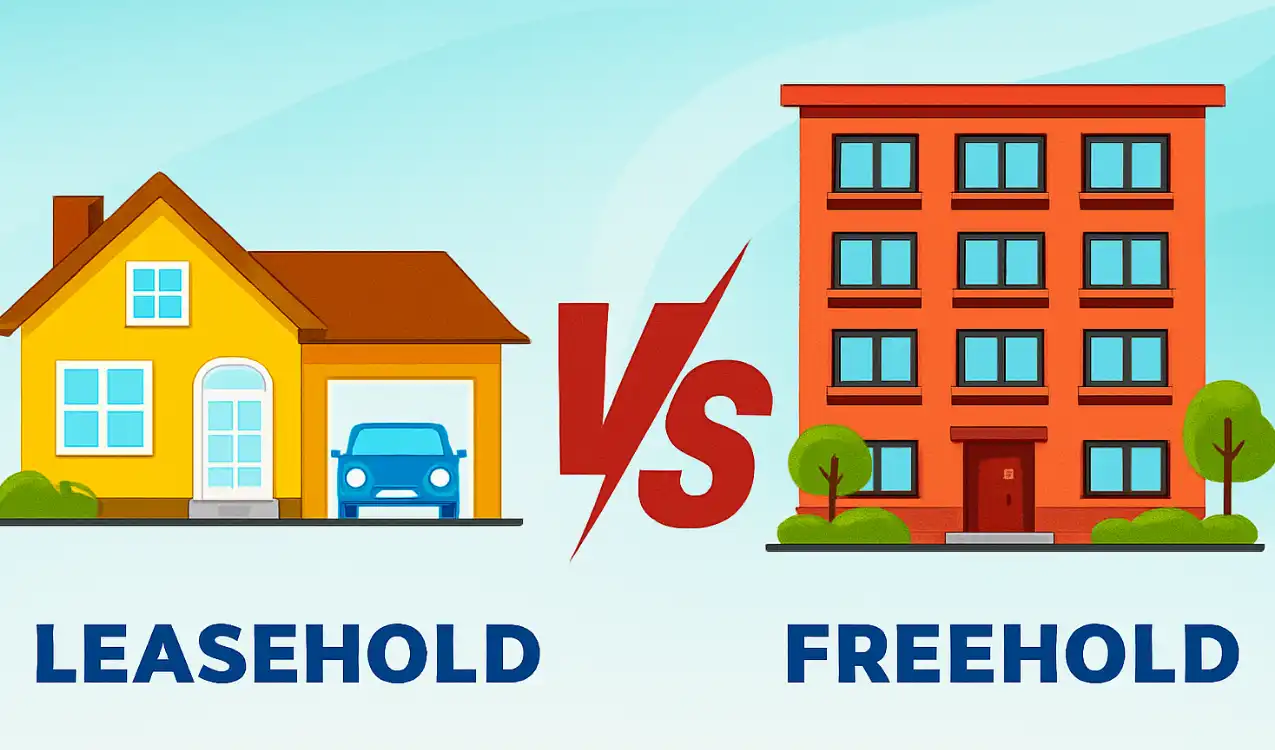
Freehold vs leasehold what auction buyers must know
When you are buying property at auction, one of the first things you need to establish is whether the lot is freehold or leasehold. This is not a minor detail. The difference between the two types of ownership has a direct impact on the property’s value, your legal obligations, your ability to get a mortgage, and what you can and cannot do with the property once you own it.
Understanding freehold vs leasehold before you bid — not after — is essential. At auction, the moment the hammer falls, you are legally bound to complete the purchase. There is no going back, no cooling-off period, and no opportunity to renegotiate once you have discovered something you did not expect in the legal pack.
This guide explains both types of ownership clearly, highlights the specific risks that leasehold properties present at auction, and tells you exactly what to check before you raise your hand.
What does freehold mean?
Freehold is the most straightforward form of property ownership in England and Wales. When you buy a freehold property, you own both the building and the land it sits on, outright and indefinitely. There is no time limit on your ownership, no ground rent to pay, and no landlord to answer to.
You are responsible for maintaining the property yourself, but you have complete control over it — subject only to planning regulations and any restrictive covenants that may be registered against the title. Detached houses, semi-detached houses, and terraced houses are typically sold freehold, though this is not always the case.
For most buyers, freehold is the preferred option because it is clean and simple. You own it, full stop. At auction, freehold lots still require careful due diligence, but they generally carry fewer ongoing legal complications than leasehold properties.
What does leasehold mean?
Leasehold is a very different form of ownership. When you buy a leasehold property, you are not buying the building or the land. You are purchasing the right to occupy the property for a fixed number of years — typically 99, 125, or 999 years — under the terms of a legal lease agreement with the freeholder, who is also known as the landlord.
Leasehold is common for flats and maisonettes, though it also appears on some houses. Alongside the purchase price, a leaseholder typically pays:
- Ground rent to the freeholder — an annual charge for the land the building stands on.
- Service charges — covering maintenance of communal areas, buildings insurance, cleaning, and management.
- Major works contributions — for large-scale repairs or improvements to the building.
These ongoing costs and obligations do not disappear when you buy the property. They come with it — and at auction, they may not always be clearly disclosed in the legal pack.
Why freehold vs leasehold matters so much at auction
Leasehold properties appear regularly in auction catalogues — often because they are more complex to sell through the open market, or because there are issues that a seller would rather not negotiate with an individual buyer. That does not mean every leasehold auction lot is problematic, but it does mean you need to go in with your eyes open.
The speed and binding nature of auction purchases makes leasehold properties particularly high risk for unprepared buyers. Unlike a private treaty sale, you cannot pull out after the auction without facing serious financial consequences. The legal pack is published in advance precisely so that buyers can carry out proper due diligence — and for leasehold lots, that due diligence must be thorough.
Understanding what we check in an auction legal pack — and making sure those checks are carried out before you bid — is the single most important thing you can do when considering a leasehold lot. A specialist solicitor will know exactly where the risks hide and how to assess them quickly.

The key leasehold property risks at auction
Short lease length
The length of the lease remaining is one of the most critical factors in any leasehold purchase. Once a lease falls below 80 years, extending it becomes significantly more expensive under the law. Below 70 years, many mortgage lenders will decline to lend entirely. A property with a short lease may look like a bargain at auction but can be extremely difficult to mortgage or resell.
Onerous or escalating ground rent clauses
Some leases — particularly those granted in the past two decades — contain ground rent clauses that double every ten or twenty-five years. What starts as a modest annual charge can quickly become a substantial sum that makes the property effectively unsellable and unmortgageable. These clauses must be identified and understood before you commit.
Unexpected service charge arrears
Leasehold property risks at auction often include hidden service charge arrears. If the previous owner has not paid their service charges, those debts can transfer to you on completion. Auction packs do not always disclose these clearly, and by the time you find out, you are already legally bound to buy.
Missing LPE1 form or lease summary
In a standard leasehold sale, a Leasehold Property Enquiries form — known as an LPE1 — is requested from the managing agent. This document provides essential information about service charges, ground rent, insurance, and planned major works. In auction packs, it is frequently absent or incomplete. Without it, you may have little idea of what financial obligations you are taking on.
Restrictions on use and alterations
Leases often contain strict restrictions on what you can do with the property — subletting, making alterations, keeping pets, or running a business from the premises. These restrictions can significantly affect how you intend to use the property and must be checked against your plans before bidding.
Not sure whether your auction lot is freehold or leasehold?
Before you bid, get the legal pack reviewed by a specialist. We'll identify lease risks, ground rent clauses, and anything else that could affect your purchase. Review your auction legal pack
What to check before bidding on a leasehold lot
Before you place a bid on any leasehold property at auction, make sure these points have been reviewed by a solicitor:
- Confirm the exact number of years remaining on the lease.
- Review the ground rent provisions — check for any doubling or escalation clauses.
- Request or locate the LPE1 form (or management information pack) and review all service charge figures.
- Check whether there are any known major works planned for the building that could result in large bills.
- Read the lease restrictions on subletting, alterations, and use — and confirm they are compatible with your intentions.
- Confirm your mortgage lender — if applicable — is prepared to lend on the specific lease terms.
None of this can be done at the auction itself. The work must happen before auction day. Our guide on what to do before you bid at auction sets out the full pre-auction process so you are never caught off guard.
Can you extend a leasehold after buying at auction?
Yes, in most cases — but it takes time and money. Statutory lease extension rights under the Leasehold Reform, Housing and Urban Development Act 1993 allow qualifying leaseholders to extend their lease by 90 years on a flat, or 50 years on a house. However, you typically need to have owned the property for at least two years before you can make a formal claim.
This means that if you buy a short-lease property at auction, you will need to own it for two years before extending — during which time it may be difficult to mortgage or sell. Factor in the cost of the lease extension itself (which can run to tens of thousands of pounds depending on the lease length and the property value) and you can see how a seemingly cheap auction lot can quickly become an expensive commitment.
If you are specifically buying to extend the lease and then sell, this strategy can work — but it requires careful legal and financial planning from the outset. Speaking to a specialist in auction conveyancing before you commit is essential to make sure the numbers genuinely stack up.
Freehold vs leasehold: a quick comparison
Freehold: You own the property and land outright, with no time limit, no ground rent, and no freeholder to answer to. You are responsible for all maintenance yourself, but you have full control. Mortgage lenders generally prefer freehold, and resale is typically more straightforward.
Leasehold: You own the right to occupy the property for a fixed term under a lease agreement. You pay ground rent and service charges, and you must comply with the lease terms. The value and mortgageability of the property are directly affected by how many years remain on the lease and by the specific terms of the lease agreement.
In the context of buying property at auction, the key difference is that leasehold lots carry additional layers of risk and complexity that can be very difficult to untangle after the event. Freehold lots are not risk-free either, but the issues are generally simpler to identify and understand in advance.
How Auction Solicitor can help you before you bid
At Auction Solicitor, we review auction legal packs for both freehold and leasehold properties across England and Wales. For leasehold lots, we go beyond the surface — examining the lease terms, ground rent provisions, service charge history, and any restrictions that could affect your plans.
We provide clear, plain-English advice on what we find, so you can make an informed decision before auction day. If the leasehold property risks are manageable, we will tell you. If they are not, we will tell you that too — before it costs you.
Our auction pack review service is specifically designed to protect buyers from the kind of surprises that can turn an auction purchase into a serious financial problem. And if you want to understand the full scope of what a legal pack should contain, our guide on what we check in an auction pack covers it in detail.
Do not go into an auction without knowing exactly what you are buying. Whether it is freehold or leasehold, get the right legal advice first.
For context on recent legislative changes, the Government’s guidance on leasehold and commonhold reform provides up-to-date information on how the law is changing for leaseholders in England and Wales.
Key takeaways
- Freehold means you own the property and land outright with no ongoing obligations to a landlord.
- Leasehold means you own the right to occupy the property for a fixed period, subject to the lease terms.
- Leasehold property risks at auction include short leases, escalating ground rent, hidden service charge arrears, and a missing LPE1 form.
- Buying property at auction is legally binding from the moment the hammer falls — due diligence must happen before the auction, not after.
- Always have a specialist auction conveyancing solicitor review the legal pack before you bid on any freehold or leasehold lot.
Get expert advice on freehold and leasehold auction lots
Whether you are bidding on a freehold or leasehold property, our specialist team reviews auction legal packs across England and Wales. We'll tell you exactly what you are buying — before the hammer falls.
