
What is a fire risk assessment and why does it matter when buying at auction?
A fire risk assessment (FRA) is a legal requirement for most residential buildings in England and Wales, yet it is one of the documents most commonly absent from auction legal packs. For buyers bidding on leasehold flats, converted houses, or any property within a multi-dwelling building, the absence of a current FRA is a warning sign that should never be ignored.
This guide explains what a fire risk assessment covers, who is responsible for carrying one out, why it matters specifically in an auction context, and what the consequences of buying without one could be.
What is a fire risk assessment?
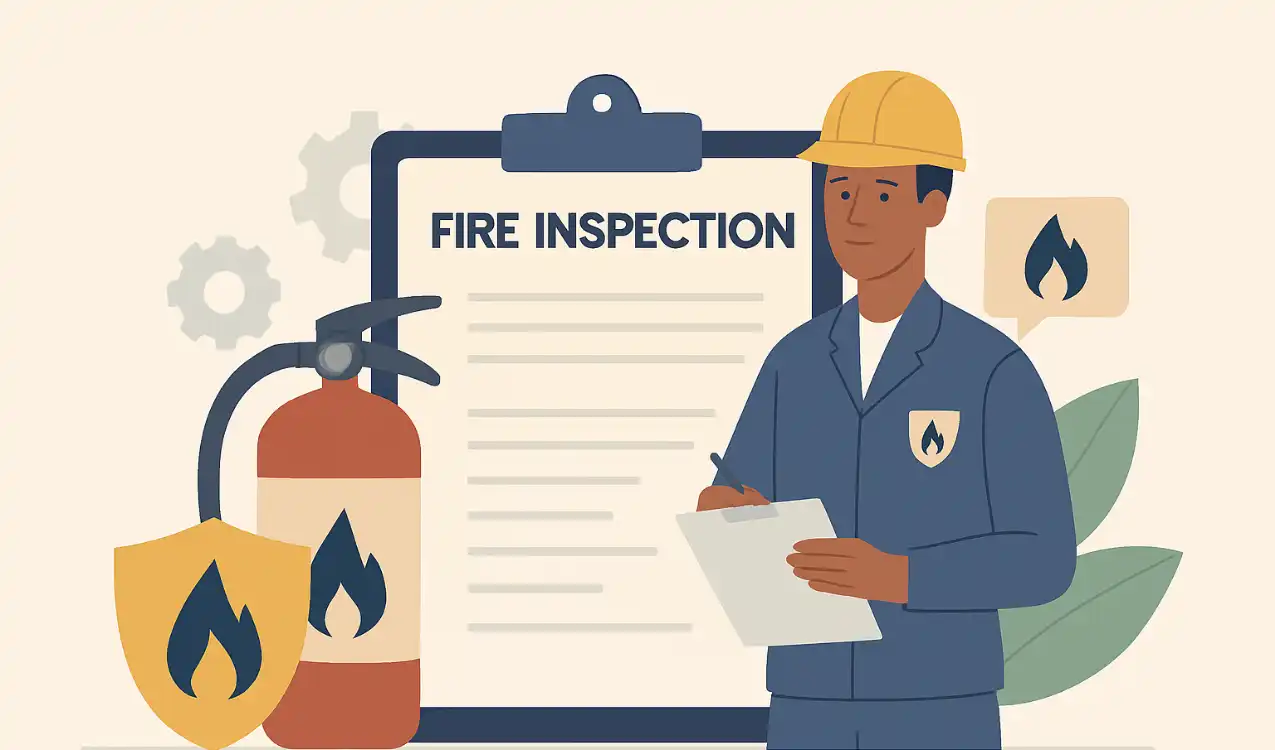
A fire risk assessment is a structured, written evaluation of the fire hazards within a building and the measures in place to manage them. Under the Regulatory Reform (Fire Safety) Order 2005, an FRA is a legal requirement for virtually all non-domestic premises and for the communal areas of residential buildings containing two or more dwellings. This includes blocks of flats, converted houses, and purpose-built apartment buildings of any size.
The assessment is not a one-off exercise. It must be reviewed regularly and updated whenever there are significant changes to the building, its use, or the occupants — and the Grenfell Tower Inquiry has placed considerably greater scrutiny on whether assessments are both thorough and current.
Importantly, following changes introduced by the Building Safety Act 2022, the fire safety obligations on building owners and managers of higher-risk residential buildings have been significantly extended. Our guide on the Building Safety Act 2022 and EWS1 form for auction buyers explains how these wider fire safety reforms affect leasehold property purchases.
What does a fire risk assessment cover?
A properly conducted fire risk assessment will typically examine the following:
- Escape routes: Whether the means of escape from the building are adequate, clearly marked, unobstructed, and compliant with current standards.
- Fire doors and alarms: Whether fire doors throughout the building are correctly specified, installed, and properly maintained, and whether the alarm system functions correctly.
- Cladding and external walls: Whether the materials used in the external wall system present a fire risk, particularly in light of post-Grenfell guidance.
- Compartmentation: Whether the building’s structure adequately contains fire and prevents it from spreading between flats, floors, or communal areas.
- Signage and emergency lighting: Whether appropriate signage and lighting are in place to guide occupants in the event of an emergency.
- Firefighting equipment: Whether any firefighting equipment, including sprinkler systems where applicable, is present, maintained, and compliant.
- Recommendations: A written list of any remedial actions required, prioritised by urgency and risk level.
The findings are summarised in a written report. This report should be made available to leaseholders and, in a sale context, to prospective buyers. When it is present in an auction legal pack, it provides an important window into the safety standards and management quality of the building.
Who is responsible for carrying out a fire risk assessment?
The legal obligation to ensure a fire risk assessment is carried out falls on the “responsible person” under the Regulatory Reform (Fire Safety) Order 2005. In the context of a residential leasehold building, this is typically one of the following:
- The freeholder of the building.
- A management company or Right to Manage company that has taken over responsibility for the building.
- A managing agent or letting agent acting on behalf of the landlord.
The responsible person must ensure that the assessment is carried out by a competent person — typically a qualified fire safety professional — and that the resulting report is acted upon. Simply commissioning an assessment and filing the report without addressing its recommendations does not satisfy the legal obligation.
For auction buyers, this matters because the quality of the fire risk assessment — or its absence — is often a direct indicator of how well the building is being managed overall. A building where fire safety obligations are being met is generally a building where service charges are being properly administered, communal areas are being maintained, and the freeholder or management company is taking its responsibilities seriously.
Why does the fire risk assessment matter specifically when buying at auction?
In a standard private sale, fire safety information is typically obtained as part of the pre-contract enquiry process and reviewed before contracts are exchanged. In an auction, that safety net does not exist in the same way. Once the hammer falls, you are contractually committed — and any fire safety issues you discover afterwards are your problem, not the seller’s.
The practical consequences of buying a leasehold flat in a building with inadequate fire safety documentation or unresolved fire safety issues include:
- Significant remediation costs: If the FRA identifies serious deficiencies, the cost of bringing the building up to standard will typically be passed to leaseholders through service charges. These costs can run into tens of thousands of pounds per flat in severe cases.
- Mortgage complications: Some mortgage lenders will ask to see a current fire risk assessment as part of their lending criteria. If one is unavailable or reveals unresolved issues, securing mortgage finance — or remortgaging in future — could be significantly more difficult.
- Resale difficulties: A flat in a building with unresolved fire safety concerns will be harder to sell. Future buyers and their solicitors will ask exactly the same questions you should be asking now.
- Regulatory action: Where fire safety obligations are being seriously neglected, the Fire and Rescue Authority has powers to issue enforcement notices or, in extreme cases, prohibit the use of the building altogether.
It is worth remembering that auction legal packs are prepared by the seller’s solicitor and contain what the seller chooses to include. There is no obligation to provide a current fire risk assessment, and many sellers simply do not. Understanding the full range of documents that should ideally be present in an auction pack — and what their absence may mean — is explained in our guide to what an auction legal pack should contain.
Is there a fire risk assessment in the legal pack you're reviewing?
We check for FRAs and other fire safety documents as part of every leasehold auction pack review — and we'll tell you clearly when one is missing. Get your legal pack reviewed
What does a missing or outdated fire risk assessment tell you?
The absence of a fire risk assessment from an auction legal pack does not automatically mean the building has a serious safety problem. There are legitimate reasons why one might not be included, including the fact that the seller may not have been able to obtain it from the managing agent in time for the auction.
However, a missing FRA can also indicate one or more of the following:
- The building has not had a compliant assessment carried out recently, which is itself a legal failing on the part of the responsible person.
- An assessment has been carried out but its findings are unfavourable and the seller has chosen not to disclose it.
- The building is being poorly managed more generally, with fire safety being just one area of concern.
An outdated FRA — one that was completed several years ago and has not been reviewed since — is similarly problematic. Buildings change over time, and an assessment that does not reflect current conditions provides limited assurance. If the pack contains an FRA, always check the date it was conducted and whether the building has undergone any changes since.
Can you request a fire risk assessment before bidding?
Yes — and it is always worth trying. Your solicitor can raise pre-auction enquiries with the seller’s solicitor to ask whether a current fire risk assessment exists and, if so, whether it can be provided before the auction date. In some cases, particularly where there is sufficient time, you may be able to obtain at least a summary of the findings.
If the seller is unable or unwilling to provide an FRA, that response should itself inform your decision about whether to bid. It is far better to identify this gap before the auction than to discover it after you are legally committed.
How we approach fire safety in auction pack reviews
When we review an auction legal pack for a leasehold property, fire safety documentation is always on our checklist. We look for the presence of a current fire risk assessment, note the date it was conducted, check whether any recommendations within it have been addressed, and flag clearly when one is absent from the pack.
We also examine the special conditions of sale carefully. It is not uncommon for auction packs to include clauses that limit the seller’s liability in relation to building safety or that require the buyer to accept the property without warranty as to fire safety compliance. These clauses are binding if you bid, and spotting them requires experience. Our guide on how special conditions of sale work in auction legal packs explains what to look for.
Our review process covers the full range of documentation in the pack — not just the title and lease, but the leasehold management information, fire safety records, service charge history, and any notices that might indicate future costs. This is what informed bidding looks like, and it is the standard we apply to every leasehold auction pack we review.
What rights does the seller have when a buyer pulls out?
When a buyer fails to complete after a traditional auction, the seller’s rights are substantial. Understanding these is important both for buyers who are contemplating withdrawal and for sellers who need to know how to protect themselves if a winning bidder disappears.
The seller can immediately retain the 10% deposit. Beyond that, they can issue a notice to complete — a formal legal notice demanding the buyer completes within ten business days. If the buyer still fails to complete after this notice, the seller can formally rescind the contract.
At that point, the seller can relist and sell the property to a new buyer. Importantly, if the resale price is lower than the original auction price — because the market has moved, the property has deteriorated, or the seller accepts a lower offer to achieve a faster sale — the original defaulting buyer is liable for the difference. The seller can also recover carrying costs incurred in the period between the failed completion and the eventual resale.
Sellers who are preparing to take a property to auction should ensure their legal pack is comprehensive and professionally drafted before the sale day. A well-prepared pack not only protects sellers legally but reduces the risk of a winning bidder having grounds to challenge the contract after the event.
Summary: fire risk assessments and auction property purchases
A fire risk assessment is a legal requirement, a safety document, and a management health check all in one. When it is present in an auction legal pack, it gives you valuable information about the building you are considering buying into. When it is absent, it raises questions that must be answered before you bid, not after.
Auction purchases of leasehold flats carry a unique set of risks precisely because so much information — including fire safety documentation — is routinely omitted from the legal pack. The contract becomes binding the moment the hammer falls, which means the time to ask difficult questions is always before auction day.
At AuctionSolicitor, we help buyers understand exactly what is and is not in the legal pack they are relying on, flag the risks that matter, and give clear, practical advice before you commit. If you have a leasehold auction pack you would like reviewed, our specialist team is ready to help.
For the official legal framework governing fire safety in residential buildings, the UK Government’s fire safety law and guidance documents provide a comprehensive reference for building owners, managing agents, and leaseholders.
Check fire safety before you bid — not after
A missing or outdated fire risk assessment is a warning sign that shouldn't be ignored. We review fire safety documentation as part of every leasehold auction pack review, flagging risks and advising you before the hammer falls.
