
Building Safety Act and EWS1 form explained for auction buyers
The EWS1 form and the Building Safety Act 2022 have fundamentally changed what it means to buy a leasehold flat in the UK — particularly when purchasing at auction. If you’re considering bidding on a flat in a high-rise or multi-storey building, understanding both of these is not optional. They can affect whether you can get a mortgage, whether you can resell the property, and whether you could be exposed to substantial future costs.
This guide explains what the EWS1 form is, what the Building Safety Act 2022 introduced, how they interact with the auction process, and what to look for in the legal pack before you bid.
What is the Building Safety Act 2022?
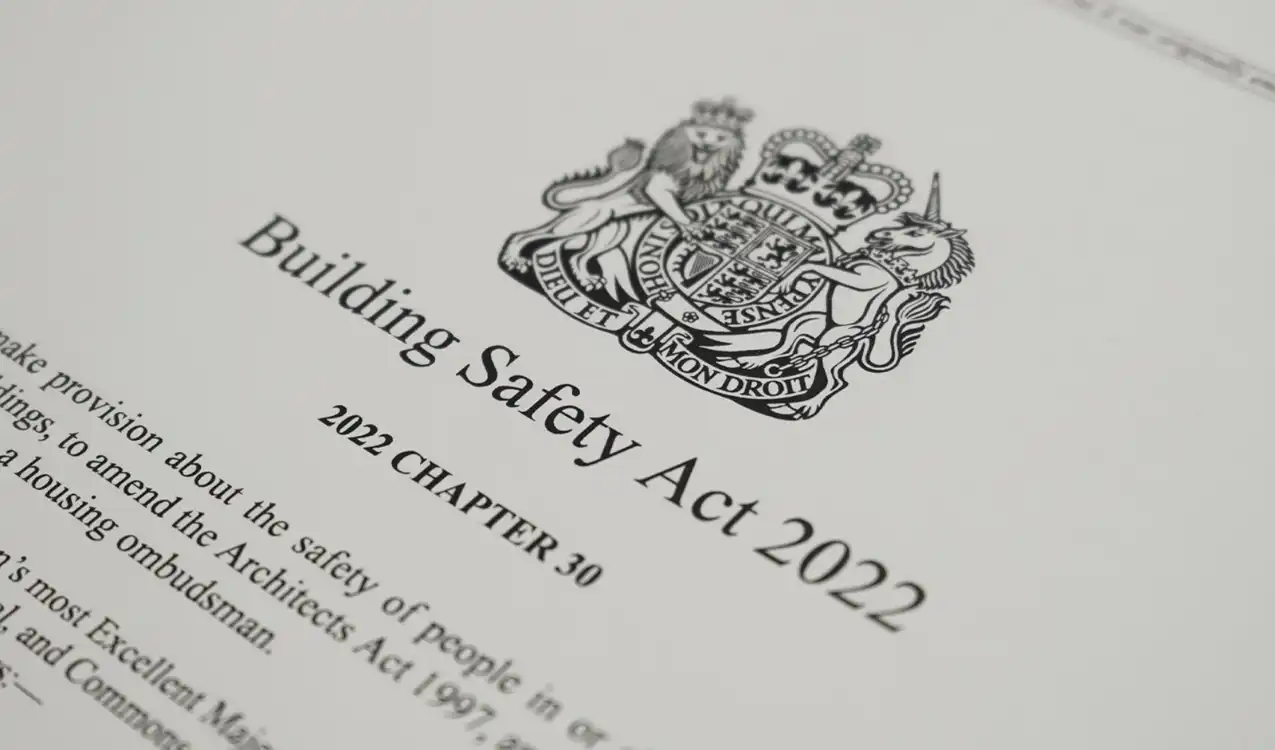
The Building Safety Act 2022 was introduced in response to the Grenfell Tower fire of 2017 and came into force as a wide-ranging reform of building safety regulation in England and Wales. Its primary aim was to improve safety standards in high-rise residential buildings and to protect leaseholders from being unfairly billed for historical fire safety defects they played no part in creating.
Key provisions introduced by the Act include:
- Extended scope: The Act applies to buildings over 11 metres or five storeys, reduced from the earlier threshold of 18 metres. This brought a much larger number of residential buildings into scope.
- Legal obligations for building owners: Owners must now actively assess, manage, and report on building safety risks. Passive ownership is no longer sufficient.
- Leaseholder protections: Qualifying leaseholders are protected from certain historical remediation costs, particularly where a responsible landlord or developer can be identified.
- Building Safety Regulator: A new regulatory body was established with enforcement powers over higher-risk buildings.
- Golden Thread of Information: Building owners are required to maintain a comprehensive digital record of the building’s design, construction history, and ongoing safety management.
It is important to understand that the leaseholder protections under the Act are not automatic or universal. They apply only where the building and the leaseholder meet specific legal conditions. If you are purchasing at auction and inherit the lease from a previous owner, whether those protections extend to you depends on the precise circumstances of the transaction.
What is an EWS1 form?
The EWS1 form — short for External Wall System form — is a fire safety assessment certificate that covers the external walls and cladding of a residential building. It was introduced by UK Finance and the Royal Institution of Chartered Surveyors (RICS) in December 2019 as a way of reassuring mortgage lenders that a building’s external wall system had been assessed by a competent professional.
The form must be completed by a qualified fire engineer and results in one of the following ratings:
- A1 or A2: No combustible materials present in the external wall system, or combustible materials are present but the risk is sufficiently mitigated. The building is considered safe.
- B1: Some combustible materials present, but adequate safety measures are in place. Considered acceptable by most mortgage lenders.
- B2: Combustible materials present and remedial work is required. A B2 rating will typically prevent mortgage lending and can make the property extremely difficult to sell.
The EWS1 form is not a legal requirement for all buildings, but it has become essential in practice for any leasehold flat in a building with cladding or external wall concerns, particularly where the buyer requires a mortgage. Many lenders will simply refuse to lend without one.

Why does the EWS1 form matter for auction buyers?
In a standard private sale, the presence or absence of an EWS1 form is usually identified and dealt with during the conveyancing process, before contracts are exchanged. In an auction sale, that protection does not exist in the same way.
When the hammer falls at auction, you are immediately bound by a legally enforceable contract. You cannot withdraw without forfeiting your deposit and potentially facing further financial claims. If you later discover that the property has no EWS1 form, or has a B2 rating requiring significant remediation works, you are already committed.
The risks for auction buyers specifically include:
- Mortgage refusal: Many mainstream lenders will decline to lend on a property with no EWS1 form or a B2 rating. If you were relying on a mortgage to complete, this can leave you unable to fund the purchase.
- Resale difficulties: A flat with unresolved fire safety status is likely to be significantly harder to sell. Future buyers and their mortgage lenders will face the same barriers you did.
- Remediation costs: Even with the leaseholder protections under the Building Safety Act 2022, not all buyers will qualify. If you purchase at auction and the protections do not apply to you in your specific circumstances, you could face demands for cladding or fire safety remediation contributions.
- Service charge increases: Buildings undergoing fire safety works often see significant increases in service charges during the remediation period, regardless of who ultimately funds the works.
Understanding what an auction legal pack should and should not contain is one of the most important steps you can take before bidding. Our detailed guide to what an auction legal pack contains and how to review it covers the documents you should always expect to find — and what their absence may signal.
Bidding on a flat with cladding or fire safety concerns?
We check EWS1 status, Building Safety Act compliance, and special conditions — so you know the full picture before you bid. Review your auction legal pack
What to look for in the auction legal pack regarding fire safety
When reviewing an auction legal pack for a leasehold flat in a multi-storey building, the following are the key fire safety documents and disclosures to check for:
- The EWS1 form itself: Is it present? What is the rating? When was it completed, and by whom?
- Building Safety Act compliance documents: Is there any reference to the building’s status under the Act, including any Building Safety Case or registration with the Building Safety Regulator?
- Fire risk assessments: A current fire risk assessment for the communal areas and external walls can provide useful context even in the absence of an EWS1 form.
- Remediation notices or s.20 notices: These indicate that major works are either planned or already under way, which could affect service charges significantly.
- Special conditions relating to fire safety: Sellers sometimes include clauses in the special conditions of sale that attempt to limit their liability for fire safety disclosures or shift responsibility for future costs to the buyer.
These special conditions are legally binding and easy to miss if you are reviewing the pack without legal expertise. Our guide on how special conditions of sale work in auction packs explains the clauses that most commonly affect buyers — and how to spot them before you bid.
What if the EWS1 form is missing from the auction legal pack?
The absence of an EWS1 form from an auction legal pack is not necessarily a red flag on its own — but it does require careful consideration. There are several possible explanations:
- The building may not require one, for example because it is under 11 metres, has no cladding concerns, or has been assessed and found not to need a formal EWS1 assessment.
- An assessment may be under way but not yet complete.
- The assessment may have been completed but not disclosed, either through oversight or deliberately.
- The building may have a B2 rating and the seller may be choosing not to highlight this.
In each scenario, the appropriate response is to seek clarification before bidding — not after. Your solicitor can raise pre-auction enquiries with the seller’s solicitor to ask specifically about EWS1 status, fire risk assessments, and any pending or planned works. If satisfactory answers are not forthcoming, that information is itself important when deciding whether to proceed.
Can you still get a mortgage on a B2-rated property?
In most cases, mainstream mortgage lenders will decline to lend on a property with a B2 EWS1 rating until the required remediation works have been completed and a new assessment confirms an improved rating. Some specialist lenders may consider such applications, but on terms that are likely to be less favourable. If you are relying on mortgage finance to complete an auction purchase, a B2 rating could leave you unable to proceed — with your deposit and potentially further sums at risk.
How we check for building safety risks in auction packs
At AuctionSolicitor, reviewing fire safety documentation is a standard part of every leasehold auction pack review we carry out. We check for the EWS1 form, note the rating where present, flag its absence where it is missing, and consider what the implications may be for your ability to finance and resell the property.
We also look specifically at the special conditions of sale for any clauses that attempt to limit the seller’s liability in relation to building safety — clauses that are common in auction legal packs and which buyers regularly overlook. Our full review process is explained on our what we check in an auction pack page.
Summary: Building Safety Act and EWS1 form for auction buyers
The Building Safety Act 2022 and the EWS1 form represent two of the most significant risk areas for anyone buying a leasehold flat at auction. Together, they affect mortgageability, future resale value, and potential exposure to remediation costs. Neither can be safely ignored.
In an auction context, the absence of an EWS1 form from the legal pack does not remove the underlying risk — it simply means you are bidding without the information you need to assess it properly. Given that auction contracts are binding from the moment the hammer falls, that is a position no buyer should willingly accept.
If you are considering bidding on a leasehold flat and want to understand what the auction legal pack does and does not tell you about building safety, our specialist team can help. We review packs quickly, flag risks clearly, and give you the information you need to bid with confidence — or to walk away from a lot that carries more risk than it appears.
For official government guidance on building safety and leaseholder protections, the UK Government’s overview of the Building Safety Act 2022 provides a comprehensive reference point for buyers and leaseholders.
Don't bid on a flat without checking its fire safety status
The EWS1 form and Building Safety Act 2022 carry serious risks for auction buyers of leasehold flats. We review the legal pack, check building safety documentation, and flag mortgage and resale risks before you commit.
