

What is an EPC and why does it matter when buying property at auction?
An EPC — or energy performance certificate — is one of the key documents you will come across in every property auction sale. Whether you are a first-time buyer or an experienced investor, understanding what an EPC is, what the rating means, and why it matters specifically in an auction context can make a real difference to your decision-making before you bid.
This guide explains everything you need to know about the energy performance certificate at auction: what it tells you about a property, what happens if it is missing from the legal pack, and what the rating could mean for your costs and plans after completion.
What is an energy performance certificate?
An energy performance certificate — commonly known as an EPC — is a legally required document that rates the energy efficiency of a property on a scale from A to G. An A rating is the most energy efficient, and G is the least. The certificate is produced by an accredited domestic energy assessor following an inspection of the property.
The EPC does more than simply assign a letter rating. It also shows:
- The property’s current energy efficiency score and its potential score if recommended improvements were made
- An estimate of the property’s typical energy costs per year for heating, hot water, and lighting
- The environmental impact of the property’s energy use, expressed as a carbon dioxide rating
- A list of recommended improvements — such as adding insulation, upgrading the boiler, or installing solar panels — along with estimated costs and potential savings
An EPC is valid for ten years from the date of issue. If the certificate was produced more than a decade ago, it is considered expired and a new one will be needed before the property can legally be sold or let. For buyers buying property at auction, it is important to confirm that the EPC in the legal pack is both present and within its validity period.
Why is an EPC a legal requirement?
Under the Energy Performance of Buildings Regulations, an EPC is a mandatory document whenever a residential or commercial property is built, sold, or rented in England and Wales. There are very limited exemptions — for example, certain listed buildings — but the vast majority of properties offered at auction will require a valid EPC to be in place.
The legal requirement exists to give buyers and tenants clear, standardised information about energy use before they commit. It allows meaningful comparisons between properties, and it provides transparency about likely running costs — something that can be especially important when bidding on older or unmaintained properties, which often attract lower guide prices but carry higher ongoing costs.
Beyond the immediate transaction, EPC ratings are becoming increasingly significant from a regulatory standpoint. The UK government has set energy efficiency targets for the private rented sector, and minimum EPC requirements are expected to become stricter over the coming years. If you are buying at auction as an investment or buy-to-let, the EPC rating of a property directly affects its long-term viability. Understanding this is part of what a thorough auction legal pack review should cover.
What does the EPC rating mean in practice?
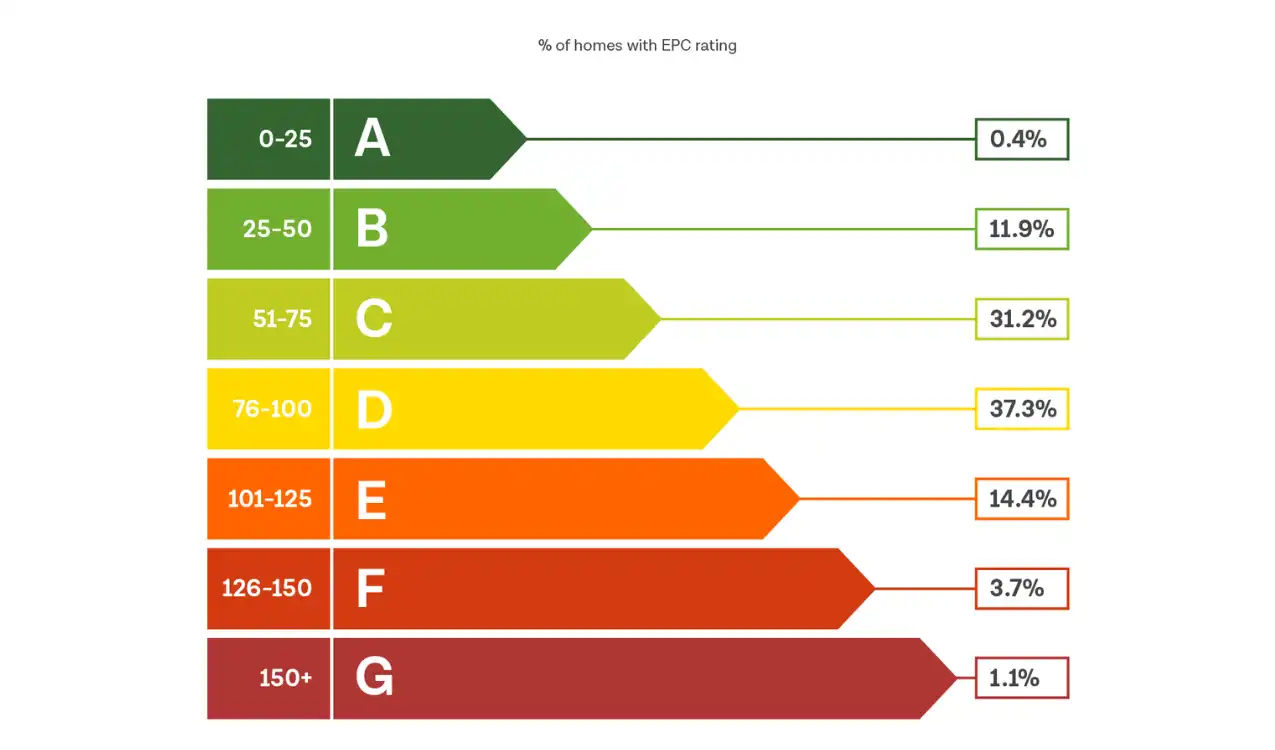
The EPC rating gives you a snapshot of how much energy the property consumes and how efficiently it uses it. In practical terms, the difference between a D-rated and a B-rated property can amount to hundreds of pounds per year in energy costs. For buyers planning to live in the property, this directly affects affordability. For investors, it affects potential yield and future capital expenditure.
What do the ratings A to G actually mean?
- A (92–100): Highly energy efficient — typically modern new-builds with excellent insulation and energy systems
- B (81–91): Very efficient — often newer properties with good insulation and modern heating systems
- C (69–80): Average to good — the rating most lenders consider acceptable for mortgage lending
- D (55–68): Below average — common in older properties; will likely require some improvement
- E (39–54): Poor — may struggle to meet minimum rental standards depending on regulatory changes
- F (21–38): Very poor — considerable investment may be needed to bring the property up to a lettable standard
- G (1–20): Extremely inefficient — potentially unlettable under current regulations without significant works
Auction properties frequently include older stock, repossessions, and properties in need of renovation. These are precisely the types that tend to sit in the D to G range. Knowing the EPC rating before you bid gives you a more realistic picture of what the property will cost to run or upgrade — and whether your budget and plans can accommodate that.
Is the EPC in your auction pack valid and complete?
A missing or expired energy performance certificate can affect your mortgage, your letting plans, and your long-term costs. Check it before you bid — not after the hammer falls. See what we check in an auction pack
How does an EPC feature in an auction sale?
In an auction sale, the EPC is typically included within the auction legal pack alongside the title documents, special conditions of sale, and any search results. Sellers are required by law to have a valid EPC in place before marketing a property, which means it should form part of the pack from the outset.
However, the reality is that legal packs vary considerably in their completeness. In some cases the EPC may be missing entirely. In others, it may be present but expired — a ten-year-old certificate on a property that has since been extended or significantly altered, for instance, may no longer accurately reflect the property’s current energy position.
This matters because, unlike a standard purchase, there is no opportunity to raise queries or request additional documents once the hammer falls. Contracts exchange immediately on the fall of the gavel. Any gap in the pack at that point is a gap you inherit as the buyer.
What should you check about the EPC before bidding?
Before placing a bid, you should verify the following:
- Is an EPC included in the legal pack at all?
- Is it valid — i.e., issued within the last ten years?
- Does it relate to the correct property — the address and description should match the lot you are bidding on?
- What is the current rating, and what is the potential rating if the recommended improvements were carried out?
- Are there any minimum energy efficiency concerns that could affect your ability to let the property if that is your intention?
If the EPC is missing or expired, you should not assume this means no certificate exists. The UK government maintains a publicly accessible register where existing EPCs can be searched by address. Checking this before the auction may reveal a current certificate that simply was not included in the pack — or it may confirm that no valid certificate is held, which is information you need before bidding.
What happens if the EPC is missing from the auction pack?
A missing EPC does not prevent a sale from proceeding at auction, but it does remove a layer of information that buyers are entitled to have. If you proceed without it, you will not know the property’s energy rating, its likely running costs, or what improvements are recommended — until after you are legally committed to the purchase.
For investors, a missing or poor EPC could affect your plans significantly. If the property is rated F or G and you intend to let it, the government’s Minimum Energy Efficiency Standards (MEES) may mean it is unlettable without first carrying out remediation works. The cost and scope of those works will vary — and without an EPC, you may be unable to estimate them accurately before the auction.
It is also worth noting that mortgage lenders increasingly take EPC ratings into account. Some lenders will not lend on properties below a certain rating, or will lend only on the condition that improvements are carried out within a defined period. If you plan to finance your purchase through a mortgage, the EPC rating is therefore also a funding consideration.
Where to find an EPC for a property
If the EPC is not included in the legal pack, or you want to verify the one provided, the official government EPC register allows you to search for existing certificates by postcode, street name, or certificate reference number. This is a free service and can confirm whether a valid certificate exists, what rating the property currently holds, and when the certificate was issued. Checking this before the auction takes only a few minutes and can provide useful context — particularly if the pack is incomplete or if you are researching a property ahead of a pre-auction legal review.Summary
The energy performance certificate is a legally required document in every auction sale, and it provides important information about a property’s running costs, energy efficiency, and improvement potential. In an auction context, where contracts exchange at the fall of the hammer and there is no opportunity to raise queries afterwards, reviewing the EPC before you bid is a straightforward but essential step.
Check that the EPC is included in the legal pack, that it relates to the correct property, and that it is within its ten-year validity period. If it is missing or expired, use the government register to search for an existing certificate — and factor any gaps or concerns into your assessment of the lot before bidding.
If you want a specialist to review the legal pack in full — including the EPC, title documents, searches, and special conditions — our team can provide a comprehensive pre-auction legal review at a fixed fee. Find out more about what we check in an auction legal pack and how to get started before your auction date.
Don't let a compliance gap catch you out at auction.
An EPC is a legal requirement in every auction sale — but packs are frequently incomplete. Our specialist solicitors review every document in the auction legal pack, including the EPC and all compliance documents, so you know exactly what's there, what's missing, and what it means before you bid.
